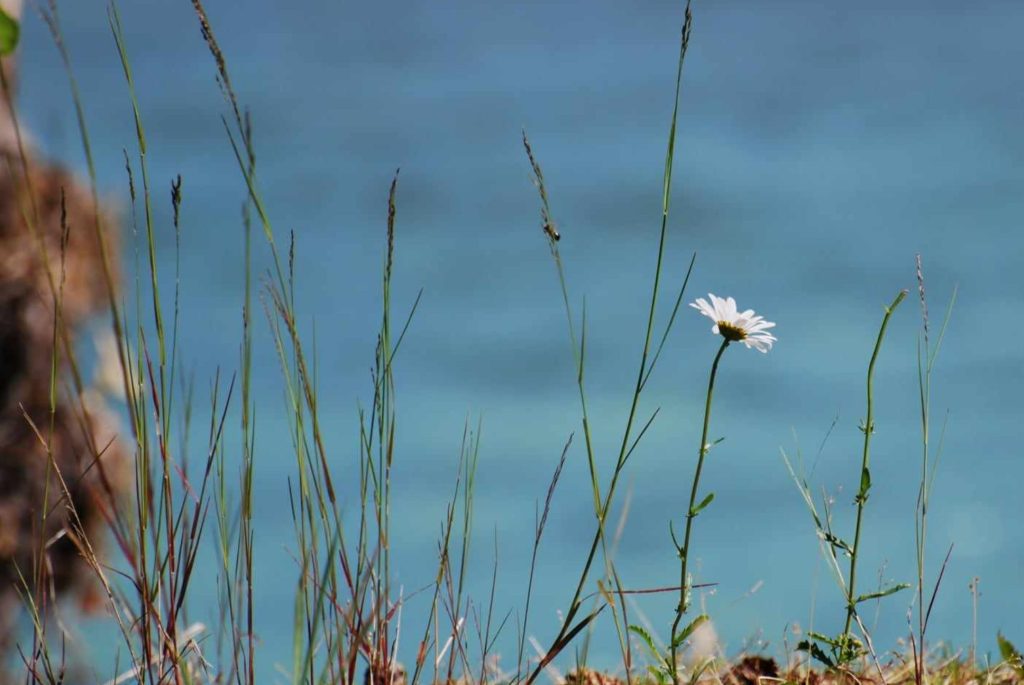
winter moon
chimney smoke
feathers the pines
Margaret Anderson, Vancouver, BC
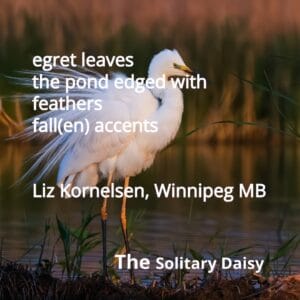
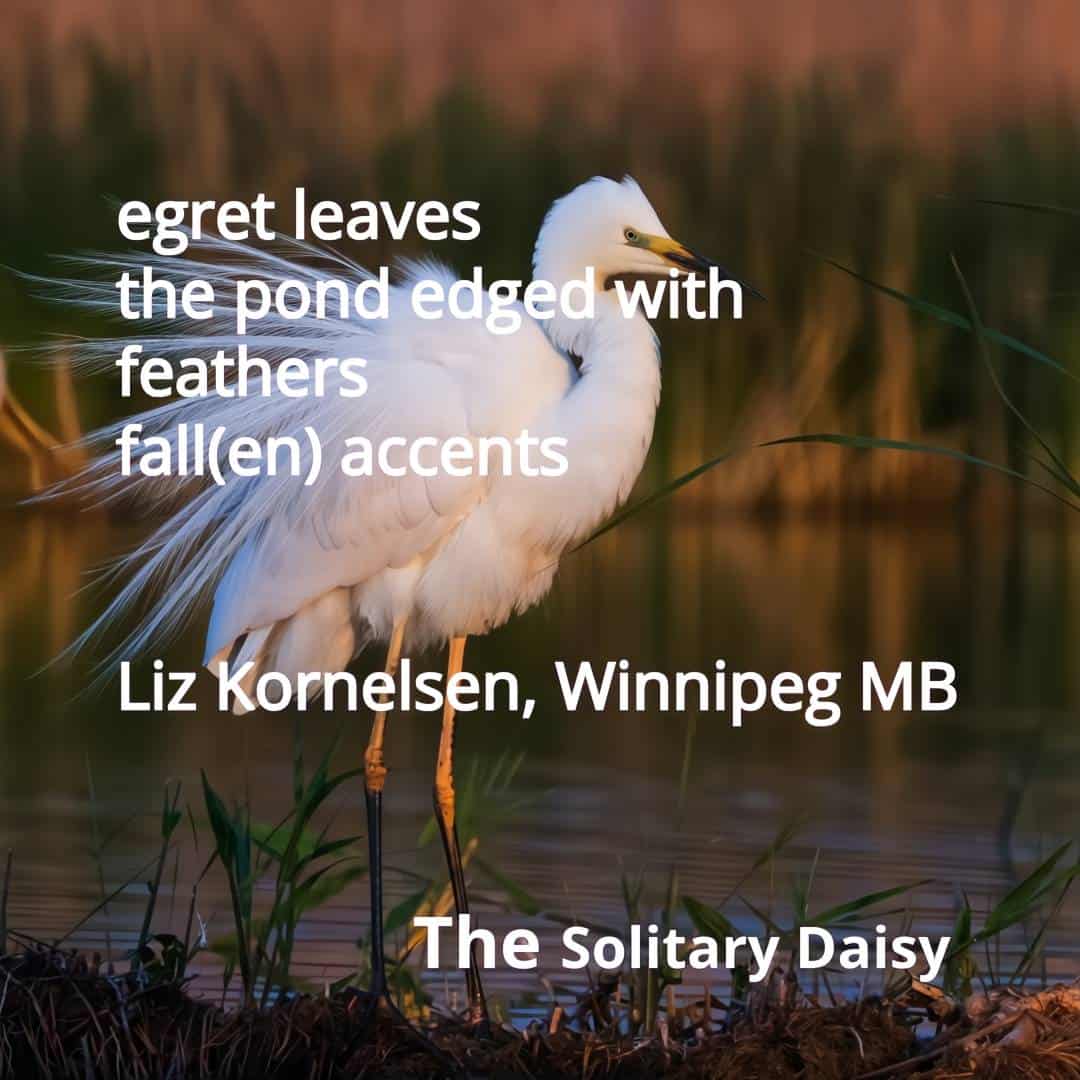
egret leaves
the pond edged with feathers
fall(en) accents
Liz Kornelsen, Winnipeg MB
wingbeats—
a cloud of starlings
feathering the sky
Kim Klugh, Lancaster, Pennsylvania
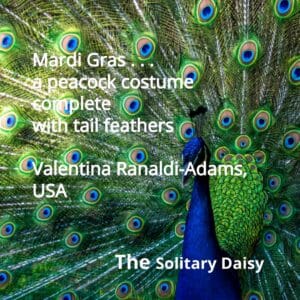
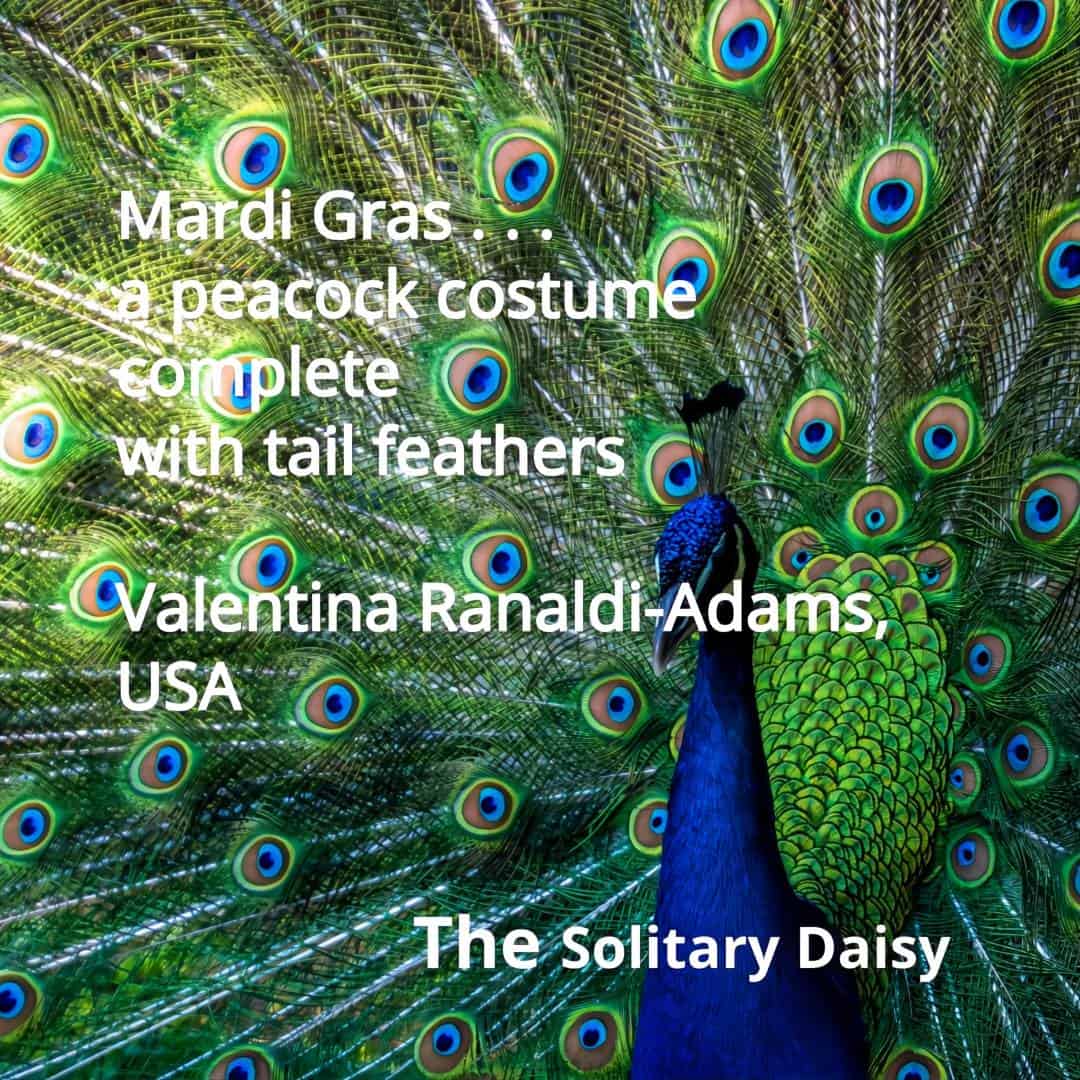
Mardi Gras . . .
a peacock costume complete
with tail feathers
Valentina Ranaldi-Adams, USA
living out
of my suitcase -
two thrush feathers
Vishal Prabhu, Greater Himalayas, India
snow flakes a feather’s failed attempt at flight
C. Oulens, India
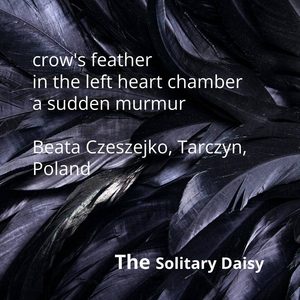
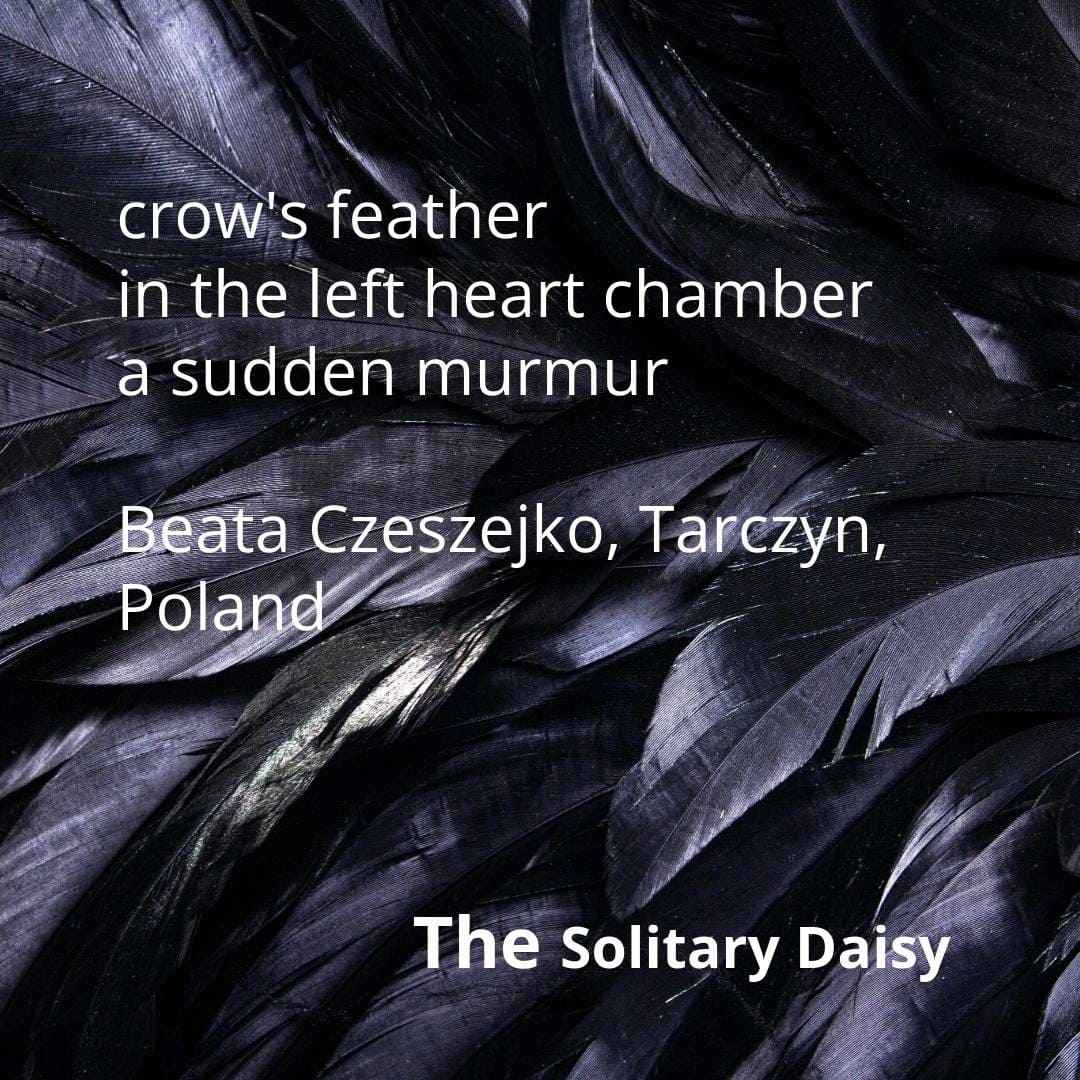
crow's feather
in the left heart chamber
a sudden murmur
Beata Czeszejko, Tarczyn, Poland
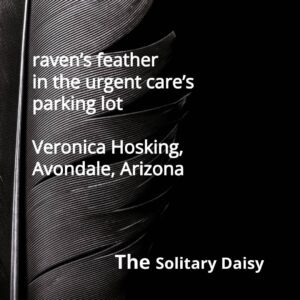
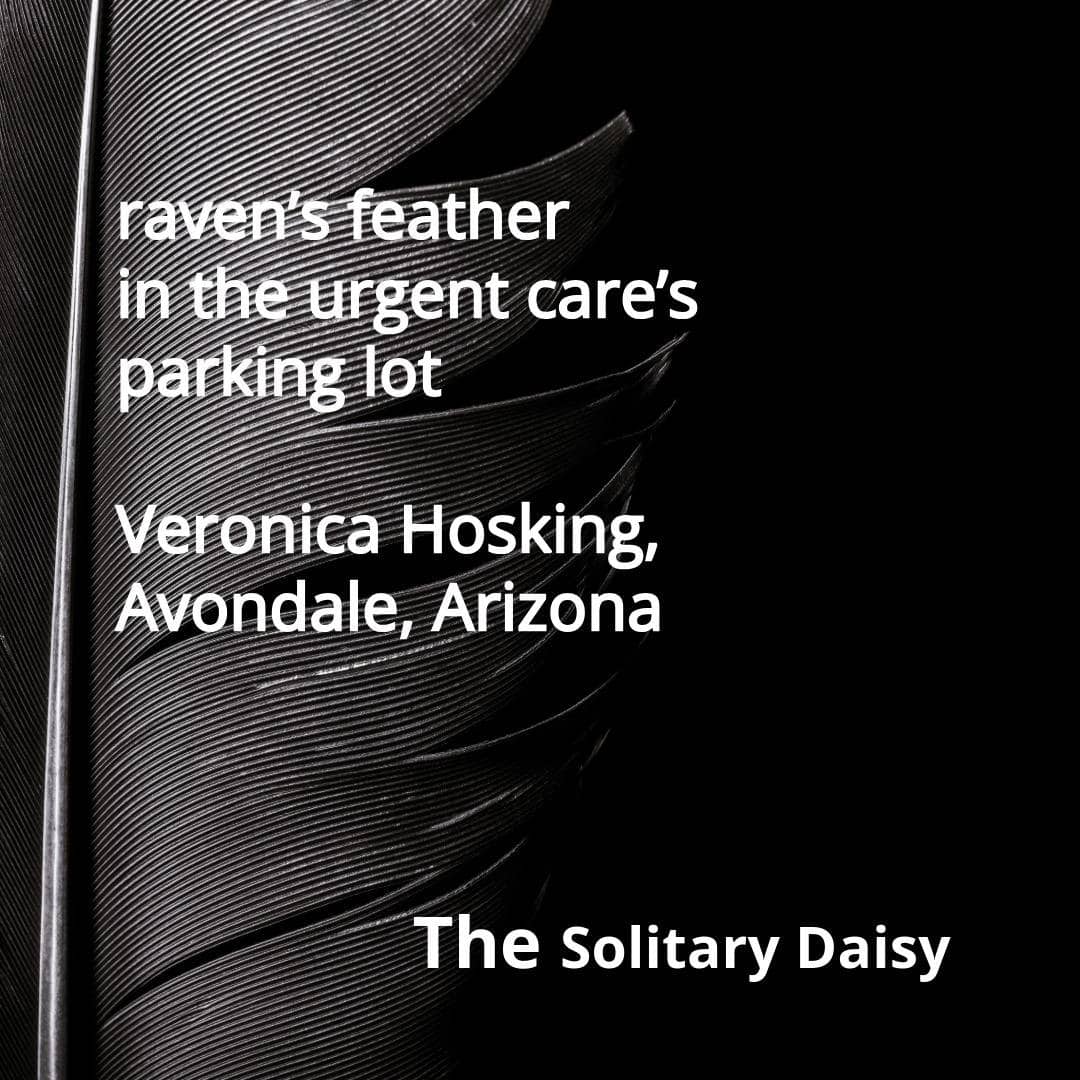
raven’s feather
in the urgent care’s
parking lot
Veronica Hosking, Avondale, Arizona
morning dew
fine mist beads on
a raven feather
AJ Johnson, Stephens City, VA USA
October sun
the damp feathers
of my pillow
Angiola Inglese, Italy
Michele’s Musings
Dear friends,
Thank you so much for the amazing winter haiku that you all sent in response to our call! We have been busy working through them and are almost ready to pass them over to Frithjof, our webmaster, to turn into a delightful advent calendar for you all to enjoy over the month of December!
The feather prompt also brought out some excellent haiku! I’m constantly amazed at the unique ways the prompts are used and the increasing talent you all have as you keep on writing!
We are enjoying a long, luxurious autumn here but the nights are also stretching out. Long night is a traditional Japanese season word associated with autumn and the shift into dark winter.
a copper pheasant’s feet
fidget on the branch—
this long night…
Yosa Buson
I’m looking forward to reading your haiku about long nights for our next issue’s submissions!
Keep on writing!
Member News
Jeral Williams, from Mobile, Alabama sends us this news:
I am pleased to report one of my haiku has been selected by the Haiku Canadian Review
daily kiss
unreturned
in memory care
Way to go, Jeral!
Congratulations to Solitary Daisy friend Al Rempel on his upcoming book! Buckhorn is a mix of 13 haiku and related poems. It is now available for pre-order though BC publisher Caitlin Press.
“In his fifth book of poetry, Rempel returns to his cabin in the woods, observing the rural area of Buckhorn from a fresh vantage. Buckhorn maps the serendipitous intersections of human and animal pathways, recording the rich ecosystem at the edge of the sub-boreal forest. Playing off thirteen haiku scattered throughout the book and charged with keen insight and past histories, Buckhorn is packed with compelling poems stripped bare of punctuation and pretence.” Caitlin Press
Please send us your news so we can share it with everyone!
In the Whitespace with Sean
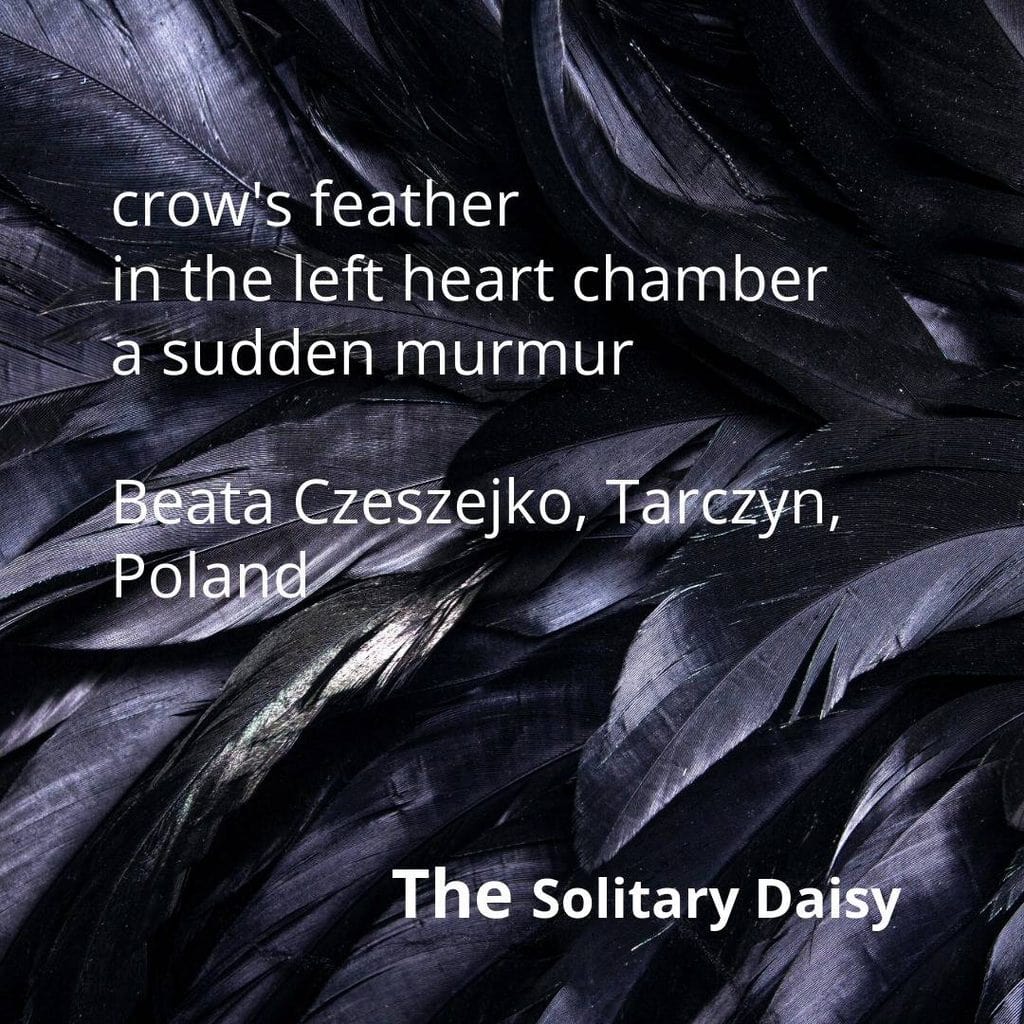
This is a striking haiku built around the juxtaposition of two distinct images: a crow’s feather and a sudden heart murmur. The poem places an external natural object alongside an internal bodily event, allowing their proximity to generate associations without explaining the connection.
“crow’s feather” offers a small, tangible remnant of the bird. Crows carry associations with death, omens, intelligence and the uncanny, but the poem doesn’t insist on any particular symbolism. The feather’s delicacy and lightness are enough to make it suggestive; it is a trace of something that has departed.
“in the left heart chamber” shifts abruptly from the natural world to precise anatomical language. Rather than invoking the heart as a familiar metaphor for emotion, the poem locates us within its physical structure. This clinical specificity gives the image an unexpected gravity.
The final line, “a sudden murmur”, completes the cardiac image. A heart murmur is a medical term for an unusual sound associated with blood flow, but “murmur” also suggests a whisper or subdued voice. It operates in both physical and emotional registers. “Sudden” introduces an interruption, contrasting with the feather’s apparent stillness.
The two images resonate through their delicacy and slightness: one a visual trace, the other an almost imperceptible sound. The crow may lend the cardiac event a faint association with mortality, while the feather’s lightness contrasts with the heart’s vital function. These connections remain suggestive rather than fixed.
The word “murmur” is particularly effective. A word such as “flutter” might make the association with the feather more obvious, but would narrow the poem’s possibilities. “Murmur” preserves the clinical meaning while allowing an emotional undertone.
The poem’s economy is central to its effect. The first line offers an image; the second and third form a separate, coherent image. Their juxtaposition creates a space for the reader to make connections between nature, the body, vulnerability and mortality. Nothing needs to be explained or resolved.
This is a haiku that trusts its images. Its strangeness comes not from a literal or narrative relationship between the feather and the heart, but from the resonance created by holding them together.
Sally’s Notebook
My Very, Very Bad Day and What I Learned From It
The day started normal enough. I got up, had my breakfast, cuddled the cat. Then I received a message from my publisher. Finally, he had the copies of one of my books I requested for an author event. All I needed to do was e-transfer the cost. Except, when I tried to open my account from my PC, it wouldn’t let me. I don’t have a banking app on my phone because it’s too old (iphone 6).
So I had to get in my car, drive to the bank, wait in line – all so the teller could open my account and let me make an e-transfer from their computer.
I came home.
My next task was to assemble all the feather haiku submissions into one document. It took me two hours. Then I somehow managed to screw up the save and deleted the whole thing. It was irretrievable. Because we’re working on a deadline, I had to spend another two hours re-doing the whole thing.
Just when I thought my day couldn’t get any worse, I accidentally dropped my weak-ass, ancient phone into a sink full of water. I fished it out, removed the case, dried it off with a towel, and threw it into a bag of rice, hoping it could somehow be salvaged.
But here’s the thing…
The money got sent. The deadline was met. And somehow, being unplugged, so to speak, for the remainder of the night wasn’t such a bad thing.
I made bean dip, with homemade guacamole. I binge watched a season of “Reacher.” I went to bed and instead of spending hours scrolling TikTok, I went to sleep and slept soundly.
Bad days are going to happen. But as I’ve heard it said, “you’ve survived 100% of your bad days so far.” And the streak continues.
The second thing I learned is how refreshing it is to take a break from my phone every now and then. No emails, messages, phone calls. No news. I was no longer bound to technology.
Being disconnected made me realize just how much time I spend attached to my phone. I’m old enough that I was around before cell phones and internet. This experience reminded me what life was like before. It wasn’t so bad. Of course, we all need our phones. But we don’t need to be slaves to them. They are a tool, meant to enhance our lives, not control them.
When I retrieved my phone from the rice bag the following morning, I was delighted to see it was working. Well, mostly. Every so often when I’m watching some mindless video, the sound will just disappear.
I think it’s trying to tell me something.
Just For Fun
Sally and Michele are still collecting season words from across Canada! We are especially interested in the Maritimes, Quebec, Ontario, and the Prairies. We are excited to have a collab going with a Northern Canadian group for words from that region. All contributors will be credited in the book. Please mark your email “season words” and send to kelownalady@hotmail.com.
Wales Haiku Journal is open for submissions November 1st until 15th for their winter issue.
Wee Sparrow Haiku Nook is open for submissions from the 1st to 15th of November (and all the other months!).
Modern Haiku is accepting 5 to 15 haiku/senryu and/or one haibun. Deadline is November 15th.
The 2026 HSA Virtual One Day Conference is coming up on November 28th. The theme of this year’s free conference is “Cutting Through Our Times.”
Quail Eggs Tanka Journal out of the UK is open November 1st for their December issue. Send up to ten tanka by November 30th.
Fresh Words invites poets from around the world to submit haiku and senryu for a special international Christmas anthology. The theme is “Christmas in a Haiku.” Deadline to submit is November 30th.
Haiku Shack Magazine is open for all kinds of short-form poetry, with a limit of 100 words. Deadline to submit is November 30th but they only accept 50 pieces for enter as early as you can. The theme for this issue is “night.”
Poetry Pea Video Prompt for November is a short but sweet snow action scene! Deadline to submit is November 30th. Leave your haiku in the comment section on the video. I recommend watching the video several times to immerse yourself in the scene, and write your haiku before you read anyone else’s!
The British Haiku Society Awards is comprised of three categories: Haiku, Tanka and Haibun. The Competition is currently open and accepting entries from all over the world from both members and non-members of the society. Deadline is January 31st, 2027!
This Week’s Prompt

Write one or two haiku with the season word “long night”. Keep in mind the traditional placement of the phrase into autumn/ late autumn. Submissions are due by November 22nd.
Send one or two haiku to sally_quon@yahoo.com or to Michele at kelownalady@hotmail.com. Find our full submission info here. Don’t forget to tell us where you are writing from!
“A haiku is the expression of a temporary enlightenment, in which we see into the life of things.”
― ― Reginald Horace Blyth

SB Wright (Seàn Wright) is a disabled poet living in the South Australian Mid-North. Born in Nhulunbuy in Arnhem Land, he spent most of his life in Alice Springs before relocating south. A graduate of NTU, his working life has ranged widely, including roles as a security guard, martial arts instructor, trainer for an international gaming company, teacher librarian, and primary school teacher. In 2024, he became disabled due to AL Amyloidosis.
Japan and Japanese culture have been lifelong interests. While his poetry ranges from formal to free verse within the Western tradition, Japanese poetry and its English-language offshoots hold a special place in his work. His poems have been published in Verity La, Tincture Journal, Eureka Street, A Hundred Gourdes, INDaily Adelaide, Folk Ku Journal, and the anthologies The Stars Like Sand and 50 Haikus. His first collection of poetry (including Haiku and Haibun is Magpie Tales through Close-Up Books.
h.

Sally Quon is a disabled poet and photographer living in the Okanagan Valley of beautiful British Columbia, Canada. She is an associate member of The League of Canadian Poets and a member of Haiku Canada. Her work has been published in numerous journals including The Heron’s Nest, Modern Haiku, Frogpond, First Frost, and Time Haiku. She is currently working on her first book of haiku, haibun, and haiga, tentatively titled, “My Valley, My Home.”
Featherstone Creative

Michele Rule is a disabled writer from Kelowna BC. She is especially interested in the topics of chronic illness, relationships and nature. Michele is published in the Asahi Shimbun Haikuist, Pine Cone Review, the Enchanted Garden, Five Minute Lit, Shadow Pond, WordCityLit, and the anthologies F*ck the Patriarchy, Chicken Soup for the Soul, and To Live Here, among others. She is an associate member of the League of Canadian Poets and Haiku Canada. Michele has been awarded honourable mention twice for the Vancouver Cherry Blossom Festival Haiku Invitational and also for the Haiku Northwest Porad Award. Her first chapbook is Around the World in Fifteen Haiku. Michele lives in a beautiful garden surrounded by people who love her just the way she is.