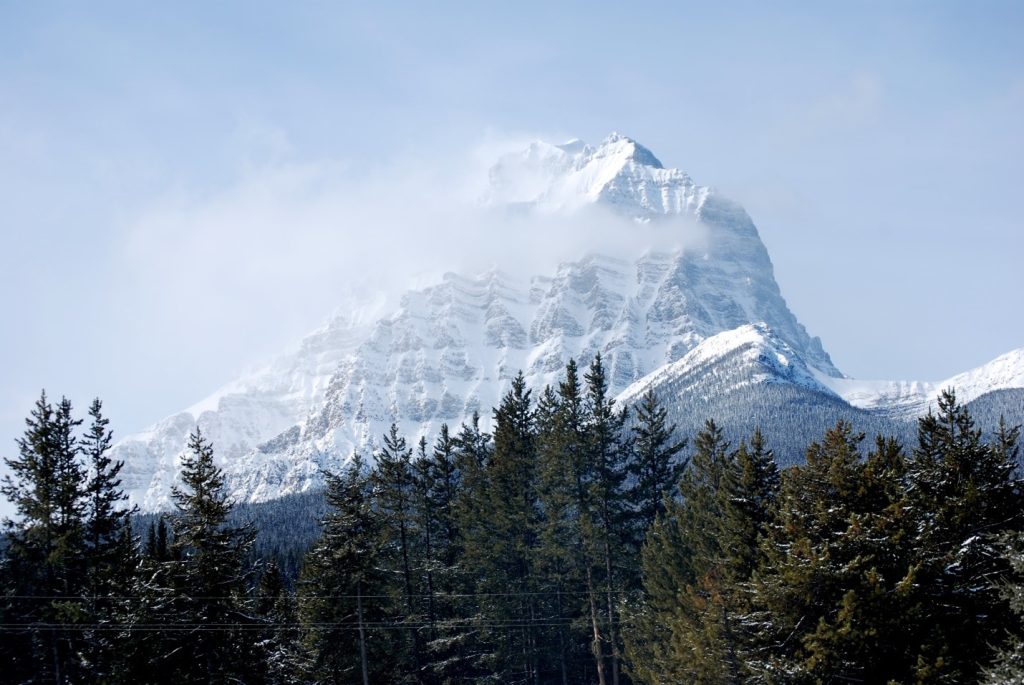
Weather
a wisp on a whim
abandons the kibanda…
puddle of gumboots
-Monica Kakkar, USA/India
alone at midnight
in a greyhound station…
record rainfall
-Chen-ou Liu
heavy rain
on the runway
her sleeping face
-Emil Karla
windblown rain
the chattering
of a thousand geese
-Tony Williams, Scotland, UK
no clouds
no wind or rain
the day after
-Jeral Williams, Mobile, Alabama
early evening
an absence of light
woven in wind
-Joanna Ashwell, UK
first fall storm dropping adjectives
-Cheryl Ashley
gradually
growing cold
my golden days
-Biswajit Mishra, Calgary, Alberta
Michele’s Musings
Thank you to everyone who reached out to wish Sally and I both well since our last issue! We really appreciate it. The haiku community is such a lovely community and you are all proving that true. As we speak, I am in Vancouver in the middle of an atmospheric river! I don’t think I have ever experienced rain like this before. No point even trying to stay dry! It’s worth it to get one last visit with our kids before winter hits and it’s too treacherous to drive. All this weather talk takes me to the fabulous weather haiku that were shared this past week. It was terribly difficult to choose. I hope you enjoy the selection!
You will notice this issue’s prompt is a little different. It’s more like a challenge. This is something that Sally and I often do to really stretch our abilities. You do not have to use the words in their original forms but we encourage you to try to use all three, in any order you like. We hope you enjoy the process and we look forward to your submissions!
Member News
This haiku from Monica Kakkar (USA/India) appeared on Charlotte Digregorio’s blog:
puff of a hookah
emerges from shifting sands—
clouds before the moon
Lovely piece, Monica!
Michael Shoemaker had four haiku published in Petals of Haiku, an anthology from Literary Revelations.
Congratulations to the following poets for having their haiku long-listed by The Haiku Foundation’s “Landscapes” call.
Barbara Anna Gaiardoni
Verona-Italy
Emil Karla
France
Julie Bloss Kelsey
Germantown, Maryland, USA
Tracy Davidson
Warwickshire, UK
Biswajit Mishra
Calgary, Alberta, Canada
Tony Williams
Scotland, UK
C.X. Turner
UK
Valentina Ranaldi-Adams
Fairlawn, Ohio USA
To read all of their haiku, and many more, click on this link
Also from the Haiku Foundation, a collection of haiga from an’ya and Jerome Berglund. You can find it here.
Café Haiku has published A Decade of Joy – Retrospective by Debbie Strange
And congratulations to Kelly Sargent for her new bio in Haikupedia!
Sally’s Notebook
A few weeks ago, Michele, Frithjof, and I, along with our friend Pam Desjardine, went on a pilgrimage of sorts to Spotted Lake, a sacred site on the land of the Okanagan/Syilx nation. Without an invitation, we only went as far as we were permitted to go – a roadside turnout along Highway 3, between Osoyoos (the location of Canada’s only true desert) and Keremeos. But even from there, the view of the lake in late September was stunning.
“Spotted Lake is the central point of the Okanagan. This lake is chief among lakes where all water, minerals, and salt converge. Our people view the lake as many lakes within a lake… Each circle (spot) has a particular healing quality.”
-Excerpt from the statement of the Okanagan Tribal Chiefs (1979)
My apologies for too many pictures and not enough words.


Here are just a few words:
spotted lake enigma
so still and fascinating
sage-rimmed beauty
	-Pam Desjardine

mineral healing ponds
the Syilx welcome song
echoes in my ears
	-Michele Rule

rare butterfly
alights in the desert-
healing waters
	-Sally Quon
And of course, what trip to the South Okanagan is complete without a visit to Tickleberries for ice cream!

Deadlines, Stuff, and Things:
You will have to act fast if you want to enter the Jane Reichhold Memorial Haiga Contest. The deadline is October 20!
October 31 is the deadline for the following journals and competitions:
Time Haiku
Pan Haiku Review (Haibun and Tanka only for this call. Our thanks to Joanna Ashwell for the heads up!)
Basho International (Make sure you check time zones in order to not miss this or any deadlines.)
November 1st is the deadline for Autumn Moon and the opening for both Frogpond and Kokako
Great reads!
Julie Bloss Kelsey interviews Dr. Sangita Kalarickal in the Haiku Foundation’s New to Haiku
For your viewing pleasure, check out these two videos. In the first, Richard Gilbert and Jennifer Hambrick discuss collaborations in haibun. Courtesy of Failed Haiku. The second video is a YouTube video titled The Lyrical Stream, a Visual, Musical, Poetic Installation
And finally, did you know you can nominate yourself or your fellow haiku poets for The Touchstone Awards? Details can be found here: The Haiku Foundation Blog
This Week’s Prompt
For this week’s prompt, we’re going to try to do something a little different. Please write a haiku that includes all three of these words – winter, constant, grave. The words do NOT have to appear on separate lines. We’re anxious to see what you come up with!
“Real haiku is the
soul of poetry. Anything that is not actually present in one’s heart is not
haiku. The moon glows, flowers bloom, insects cry, water flows. There is no
place we cannot find flowers or think of the moon. This is the essence of
haiku.”
-Santoka Tenada

Sally Quon is a disabled poet and photographer living in the Okanagan Valley of beautiful British Columbia, Canada. She is an associate member of The League of Canadian Poets and a member of Haiku Canada. Her work has been published in numerous journals including The Heron’s Nest, Modern Haiku, Frogpond, First Frost, and Time Haiku. She is currently working on her first book of haiku, haibun, and haiga, tentatively titled, “My Valley, My Home.”
Featherstone Creative

Michele Rule is a disabled writer from Kelowna BC. She is especially interested in the topics of chronic illness, relationships and nature. Michele is published in the Asahi Shimbun Haikuist, Pine Cone Review, the Enchanted Garden, Five Minute Lit, Shadow Pond, WordCityLit, and the anthologies F*ck the Patriarchy, Chicken Soup for the Soul, and To Live Here, among others. She is an associate member of the League of Canadian Poets and Haiku Canada. Michele has been awarded honourable mention twice for the Vancouver Cherry Blossom Festival Haiku Invitational and also for the Haiku Northwest Porad Award. Her first chapbook is Around the World in Fifteen Haiku. Michele lives in a beautiful garden surrounded by people who love her just the way she is.
Dear Ms. Quon and Ms. Rule,
Greetings for Friends of Libraries Week in the Canadian Library month! Congratulations to participating poets!
I am delighted to read my haiku published in The Solitary Daisy – Issue 38. It includes a Kenya saijiki long rains / short rains* season word, kigo: gumboots, a Kenya saijiki seasonless topic, muki: kibanda**, stall, lean-to, cottage, cabin, booth, kiosk, and a muki: puddle, puddles, mizutamari みずたまり (水溜まり). *Long rains (roughly March to May) and short rains (roughly October and November). **A kibanda is large enough for several pedestrians to shelter in the rain.
Thank you for sharing my published haiku. I appreciate your feedback. It includes a mid-autumn kigo: clouds before the moon***, tsuki no kumo 月の雲 (つきのくも) and muki: sand, suna 砂 (すな).
***Night of the full moon, but it is clouded and the moon can not be seen. Full moon on the fifteenth day (counting a lunar month from day one to day thirty) of the eighth lunar month, now in September. The word “moon” without further connotation, refers to the “autumn moon” in Japanese haiku. We have only to say “the moon” when we refer to the autumn moon.
It was crafted in response to the prompt: “Untitled” black Ying figure stone from southern China, October 2023, provided by Dr. Thomas S. Elias, editor of the Viewing Stone Association of North America (VSANA).
The World Kigo Database by Dr. Gabi Greve, Daruma Museum, Japan, is my primary almanac (saijiki) for kigo and muki, footnotes about kigo, and for translation of kigo and muki into English.
Thank you for your consideration.
Sincerely,
Monica Kakkar
https://www.linkedin.com/in/monicakakkar/